

Discover the recommended line, the impurities to remove and the economic benefits of proper cleaning.
Impurities in the harvest: what enters the line
Before choosing machines, it helps to know what has to be removed: average sizes and the reason for the risk.
| Impurity | Average size | Why it is a problem |
|---|---|---|
| Stones | 2–15 mm | Serious damage to fluted rolls and debranner; spark risk (ATEX) in elevators. |
| Other cereals and weed seeds | 2–5 mm | Yellow and brown specks in semolina, commercial downgrading of the product. |
| Blemished kernels (black, mouldy) | variable, identified by weight/density | Lower semolina grading, mycotoxin risk (deoxynivalenol). |
| Dust and glumes | < 1 mm | Lower semolina yield and early sifter blinding. |
Benefits for downstream processing
Every impurity removed at intake produces a measurable benefit for downstream processing and for costs.
The dry destoner protects the rolls from regrinding costs that can run into thousands of euro per incident on a durum mill.
Selective cleaning raises the semolina peak: even 0.5% more yield on 30 t/day is a significant annual return.
Removing blemished kernels before milling reduces downgrading at the finished-semolina silo.
Recommended machines
Every machine has a precise role in the cleaning diagram: the function, the right machine and, for each one, the tuning note that makes the difference.
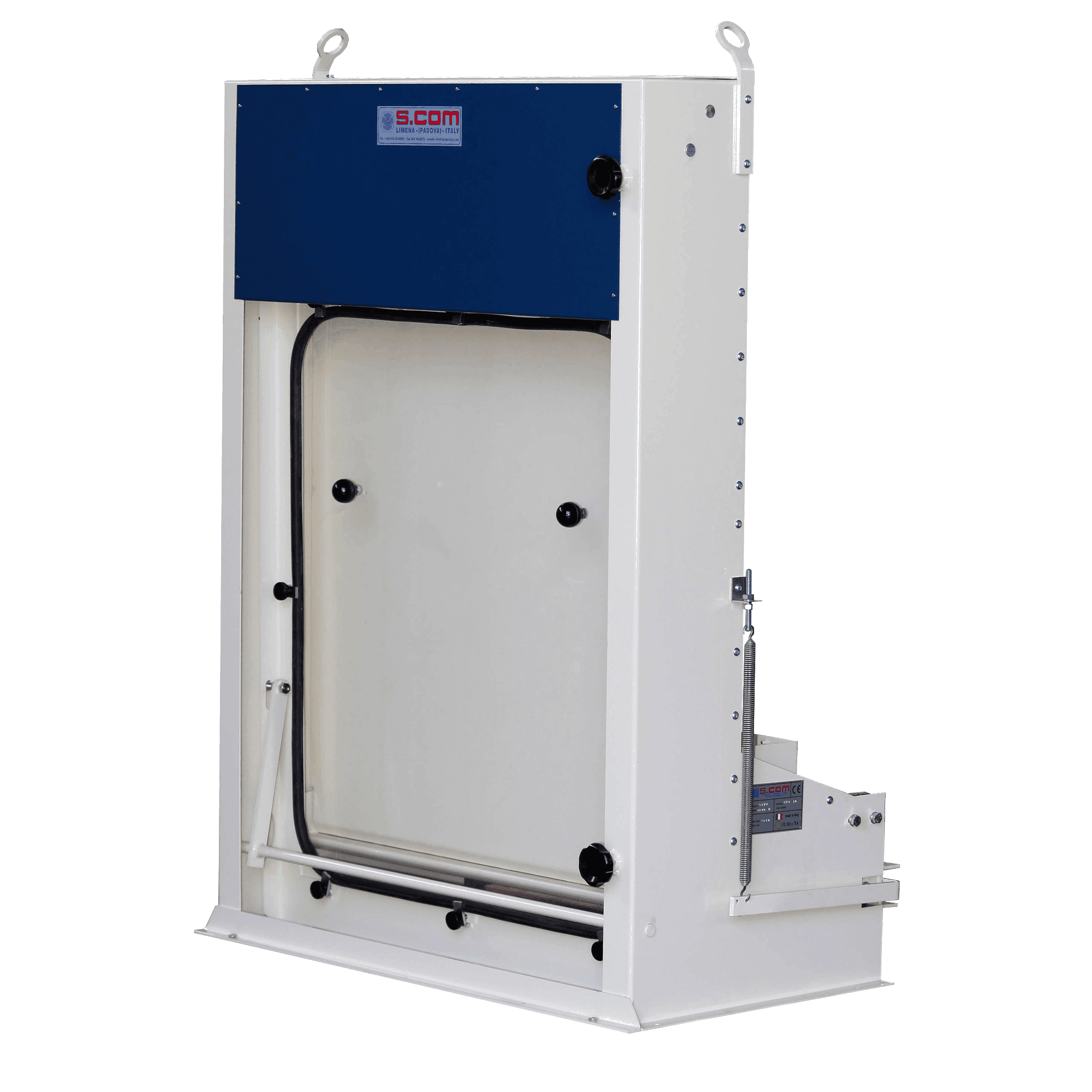
Tarara verticale STVA
Intake cleaning and high-capacity pre-cleaning before roller milling.
With correctly tuned aspiration channels and the right size for your flow rate, the STVA extracts only the light seed while preserving the good product: the optimal result is set during commissioning, not after start-up.
Separatore rotazionale SR14
Calibre selection upstream of the debranner/scourer.
Sieve selection during commissioning — calibre and frame geometry — defines the purity of the fraction: with proper setup the SR14 separates precisely without losing good product.
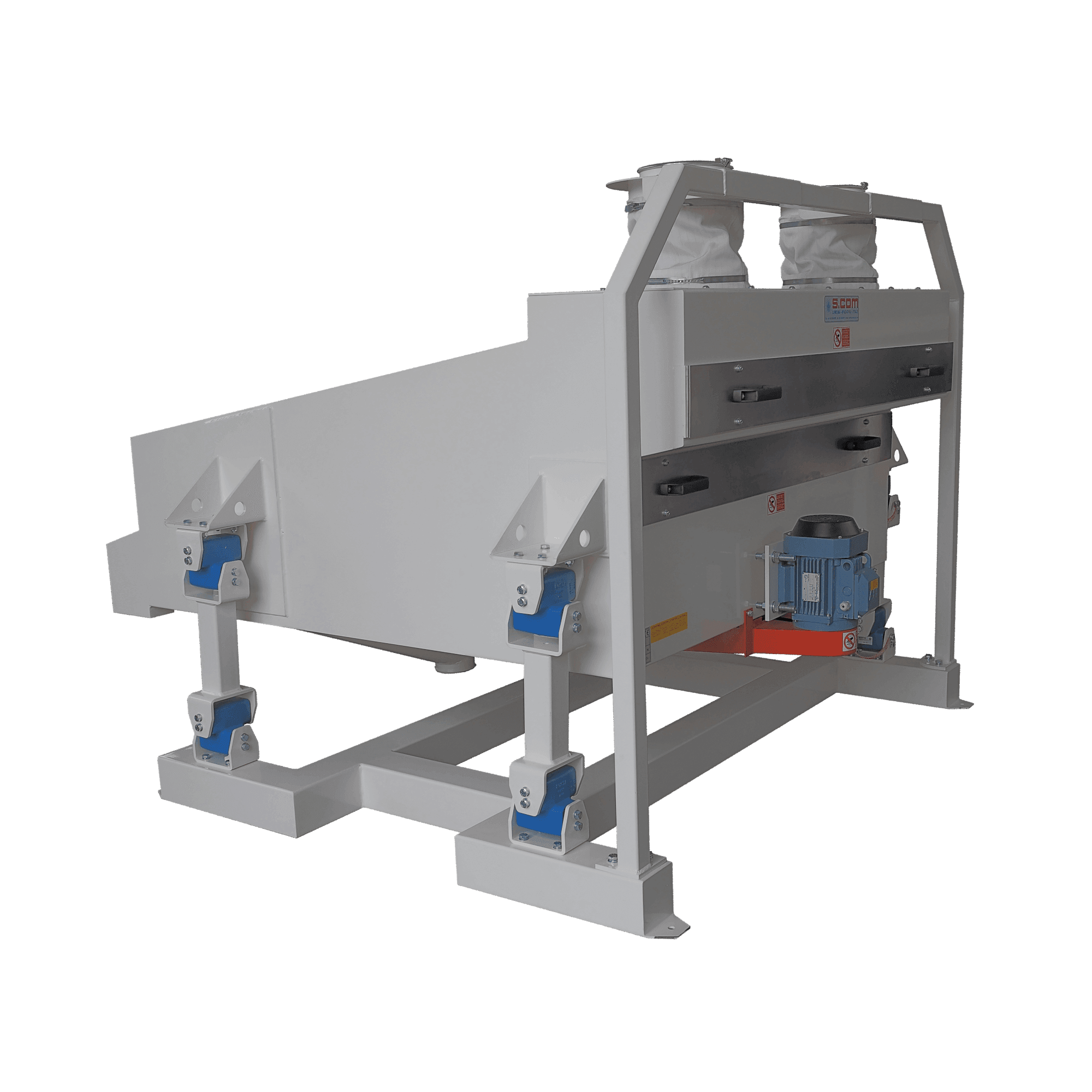
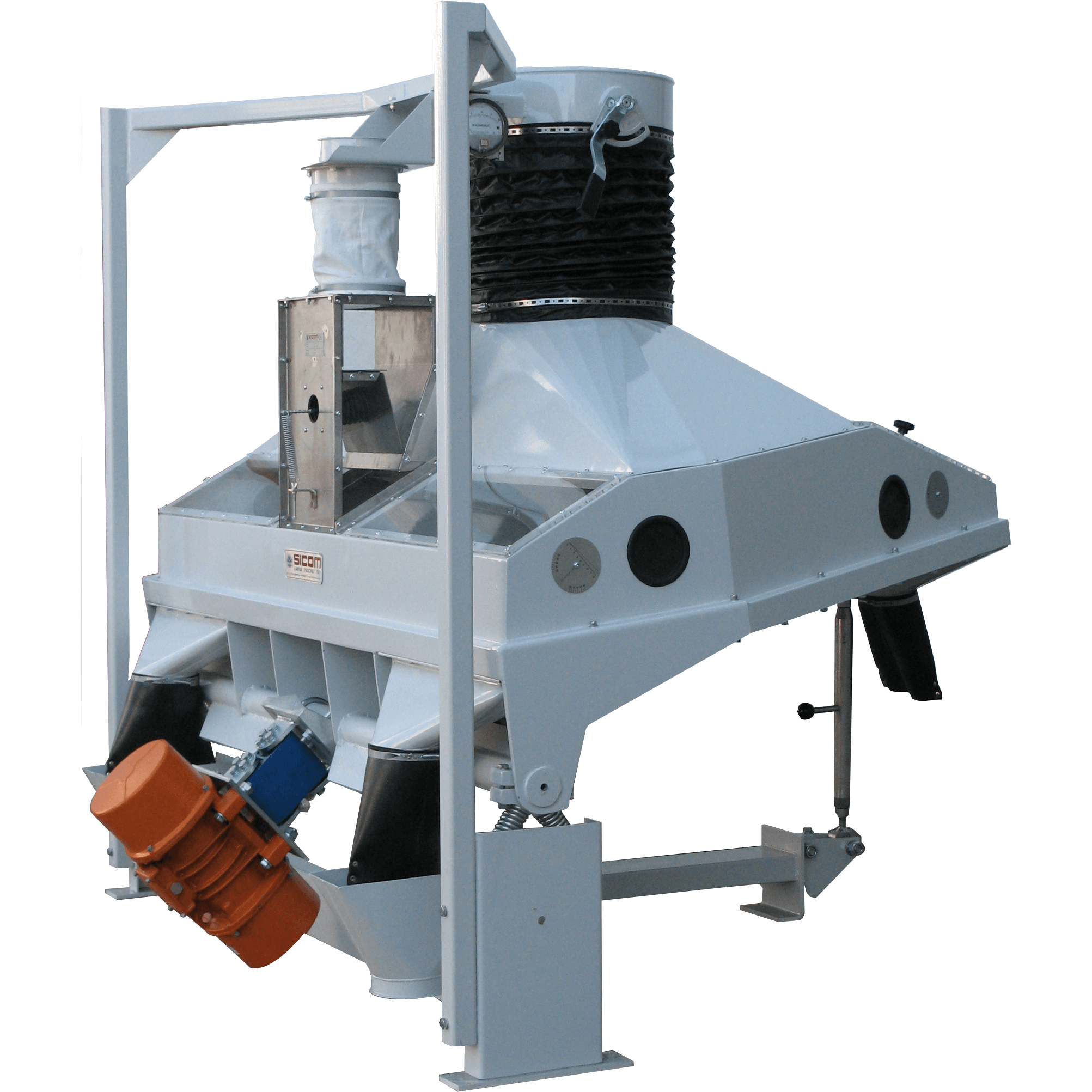
Spietratore a secco
Essential for field-harvested durum wheat: stones damage the rollers.
Fine adjustment of the air flow and deck inclination is what separates a destoner that loses product from one that separates 100%: it is tuned on your grain, not on standard values.
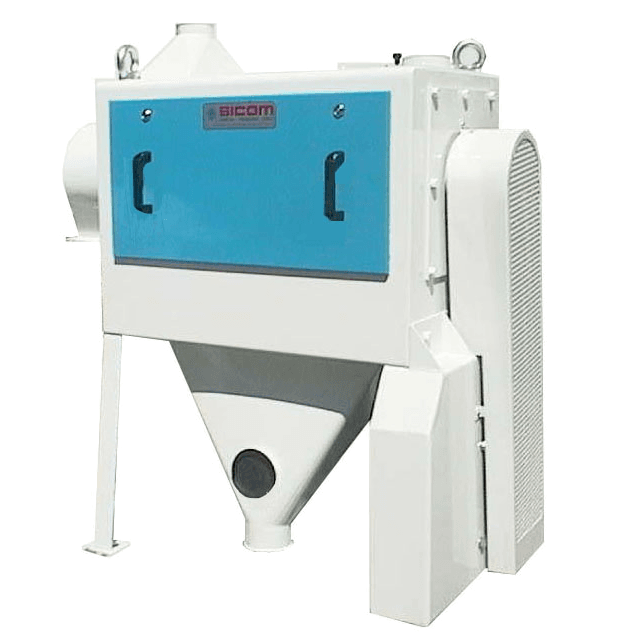
Spellatrice orizzontale
Partial husking at the pasta plant line intake.
Roller gap and feed speed are tuned to the kernel calibre: with correct setup the scourer deskins without breaking.
Let’s assess your line together
We test your product on our test bench and propose the right configuration: contact us for a tailored quotation.


