
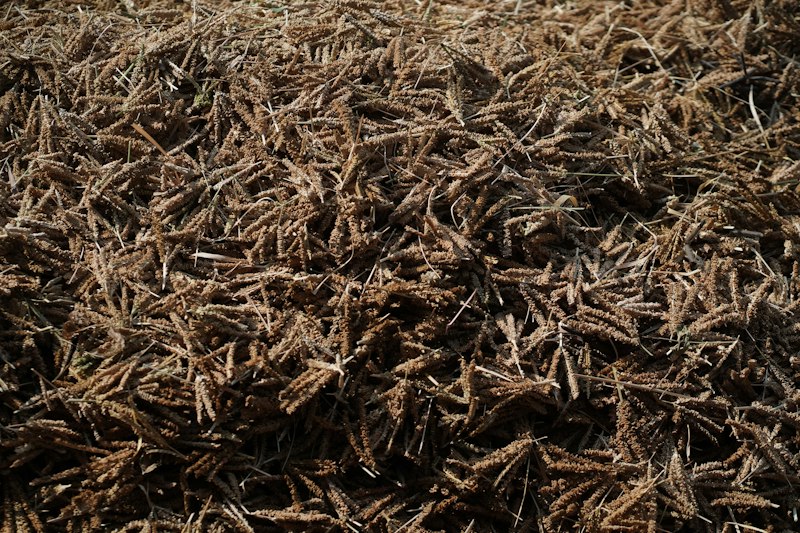
Discover the recommended line, the impurities to remove and the economic benefits of proper cleaning.
Impurities in the harvest: what enters the line
Before choosing machines, it helps to know what has to be removed: average sizes and the reason for the risk.
| Impurity | Average size | Why it is a problem |
|---|---|---|
| Wheat or rye seeds | 3–6 mm (similar to the kernel) | The number-one risk: a single trace of wheat contaminates the gluten-free lot. Must be removed at intake, not downstream. |
| Glumes and husks | 1–4 mm | Bitter notes and dark colour in the finished product. |
| Stones | 1–6 mm | Damage to dehulling and milling machines. |
| Fine dust | < 0.5 mm | High bacterial load: gluten-free products often do not undergo intense cooking. |
Benefits for downstream processing
Every impurity removed at intake produces a measurable benefit for downstream processing and for costs.
A cleaning line dedicated to gluten-free (sieves and aspiration tuned to small grains) is the condition for obtaining and keeping certification: without it, every lot is a sanctioning risk.
Removing wheat seeds at intake avoids product recall costs: a recall for gluten contamination in a gluten-free brand costs more than a cleaning line.
Small kernels (quinoa, millet) poorly tuned turn to dust: tailored calibration raises yield by up to 5-8% versus generic lines.
Recommended machines
Every machine has a precise role in the cleaning diagram: the function, the right machine and, for each one, the tuning note that makes the difference.
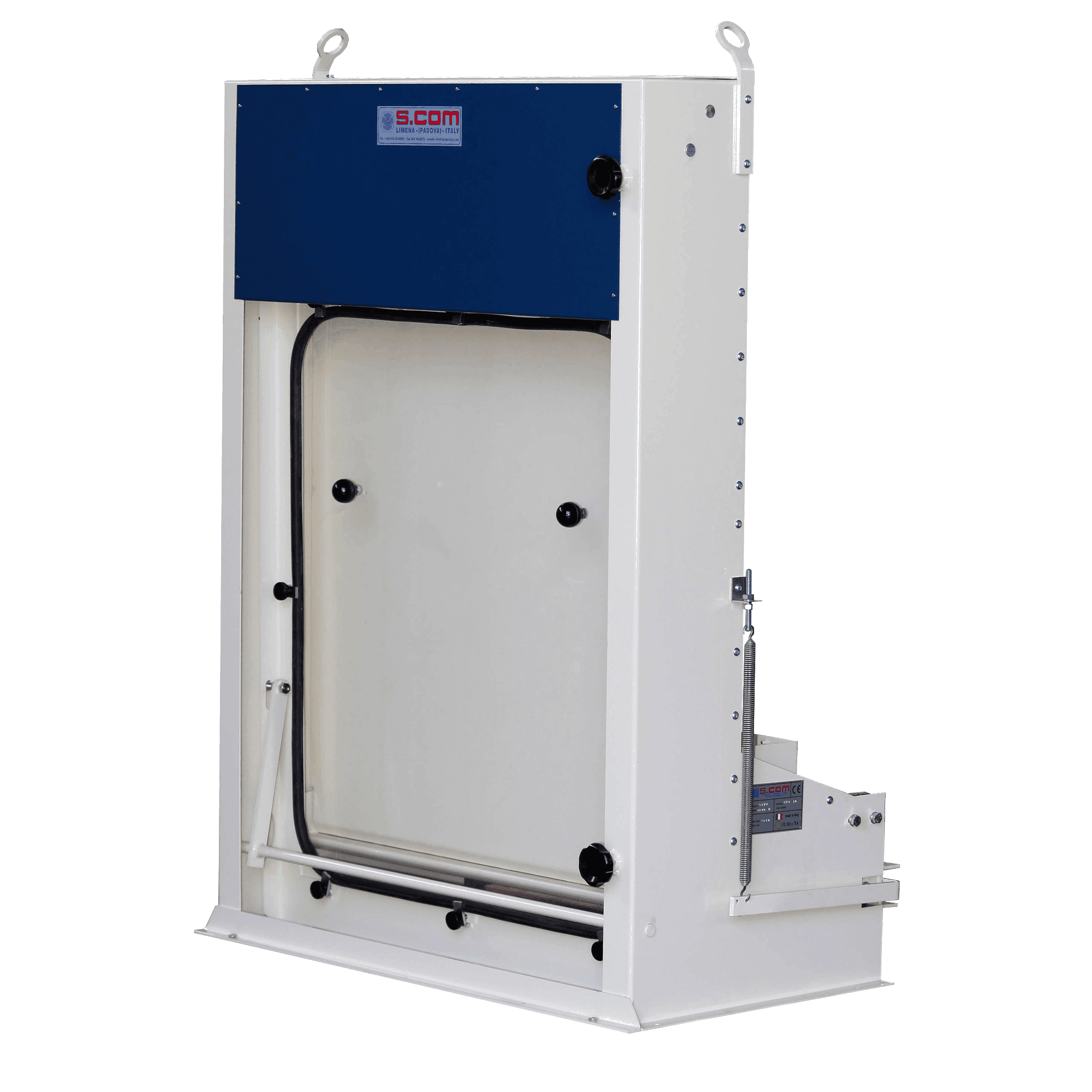
Tarara verticale STVA
Small, light kernels like quinoa and millet need gentle aspiration: the N line tuned to low capacity avoids sucking up good product.
With correctly tuned aspiration channels and the right size for your flow rate, the STVA extracts only the light seed while preserving the good product: the optimal result is set during commissioning, not after start-up.
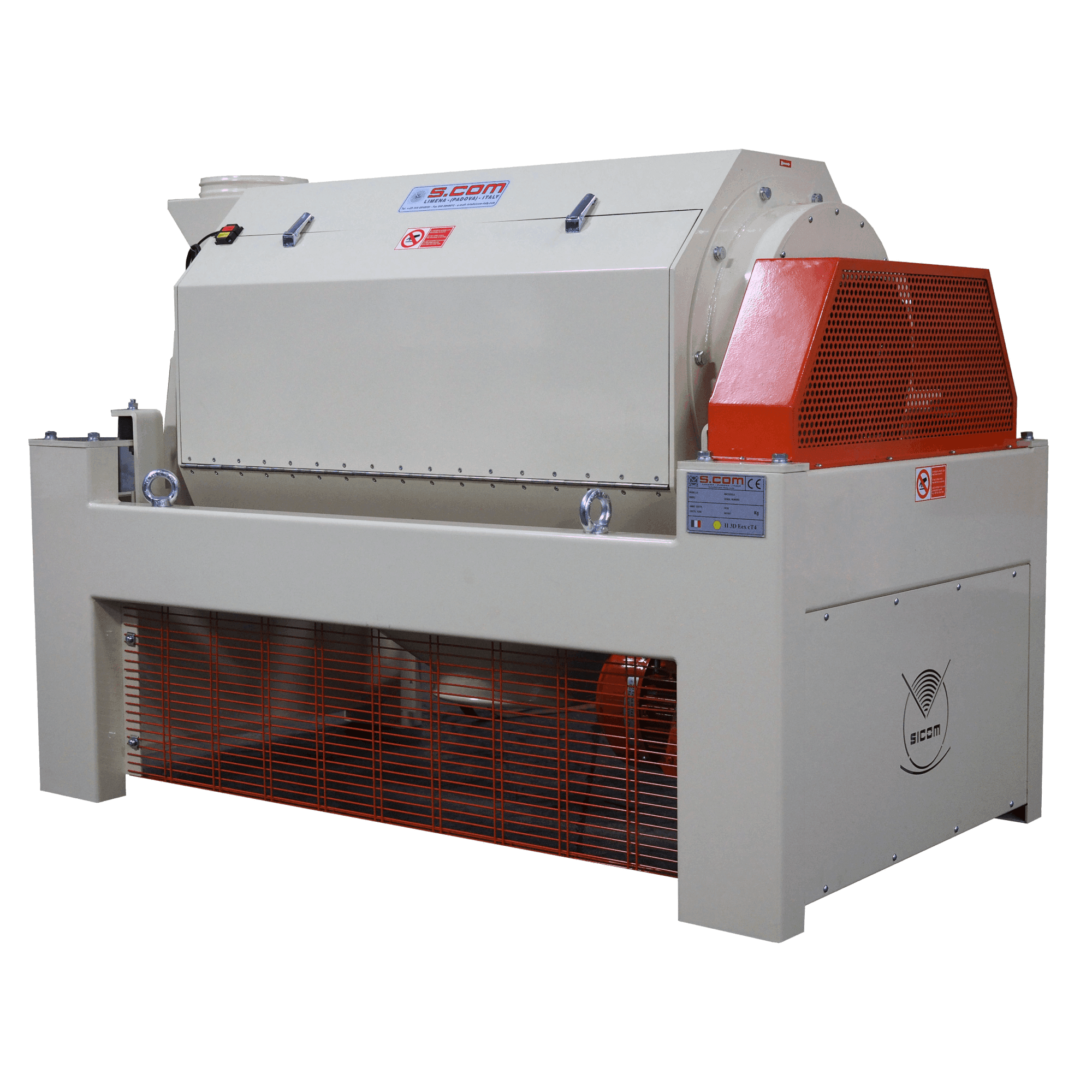
Separatore rotazionale SR14
Dedicated sieves for small grains: separates glumes and foreign seeds with millimetric calibres.
Sieve selection during commissioning — calibre and frame geometry — defines the purity of the fraction: with proper setup the SR14 separates precisely without losing good product.
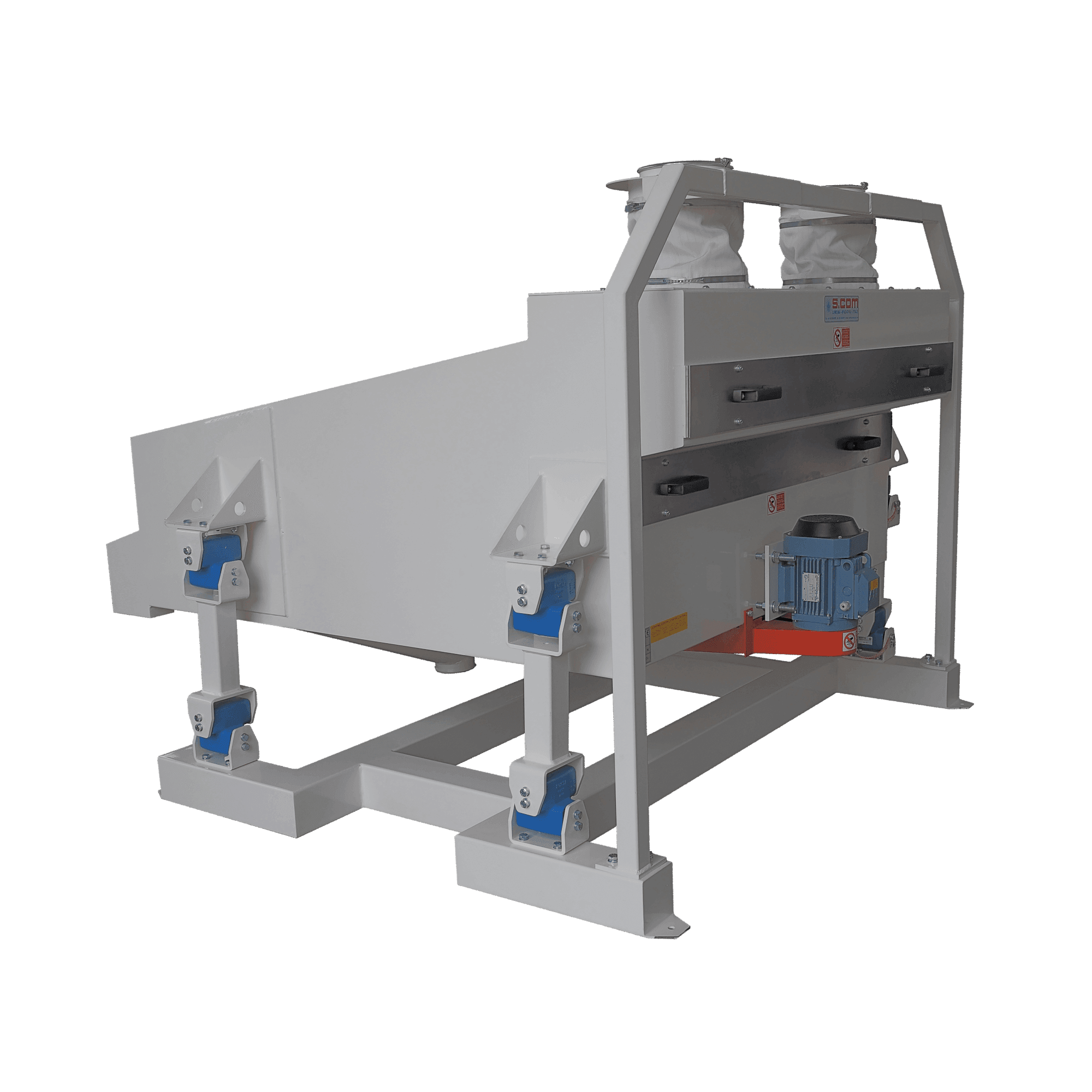
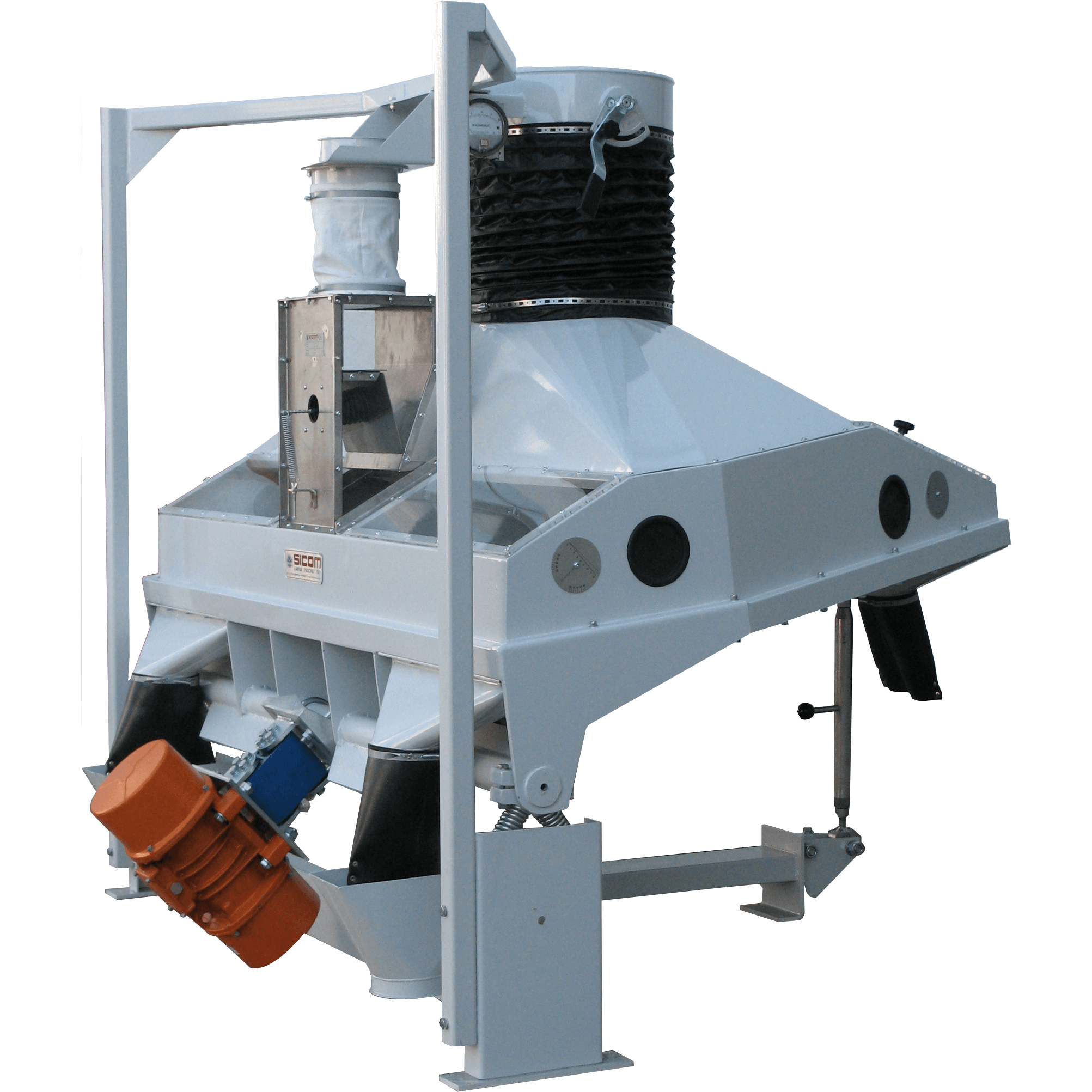
Spietratore a secco
Stones in rice and buckwheat: dry removal, no water contamination (gluten risk).
Fine adjustment of the air flow and deck inclination is what separates a destoner that loses product from one that separates 100%: it is tuned on your grain, not on standard values.
Spazzola orizzontale VO
Kernel finishing for brown rice and buckwheat destined for retail: clean appearance without chemical treatments.
Rotation speed and inclination are tuned to the kernel type: with the right setup the horizontal vibro-brusher polishes without weakening the seed.
Let’s assess your line together
We test your product on our test bench and propose the right configuration: contact us for a tailored quotation.


